Cabinet Hardware Installation in Ballantyne: How We Install Pulls and Knobs Perfectly Straight
Cabinet hardware looks like a small job until you start measuring. One hole that sits a quarter-inch off will show up on every drawer in the run. On a recent job in Ballantyne, we installed knobs and pulls through a light-gray shaker kitchen, a laundry room, and two bathroom vanities. The cabinets had not been drilled before, so the work was about layout, a consistent jig, and clean holes.
If you want a shorter overview of the service itself, see our general guide to cabinet hardware installation in Charlotte.
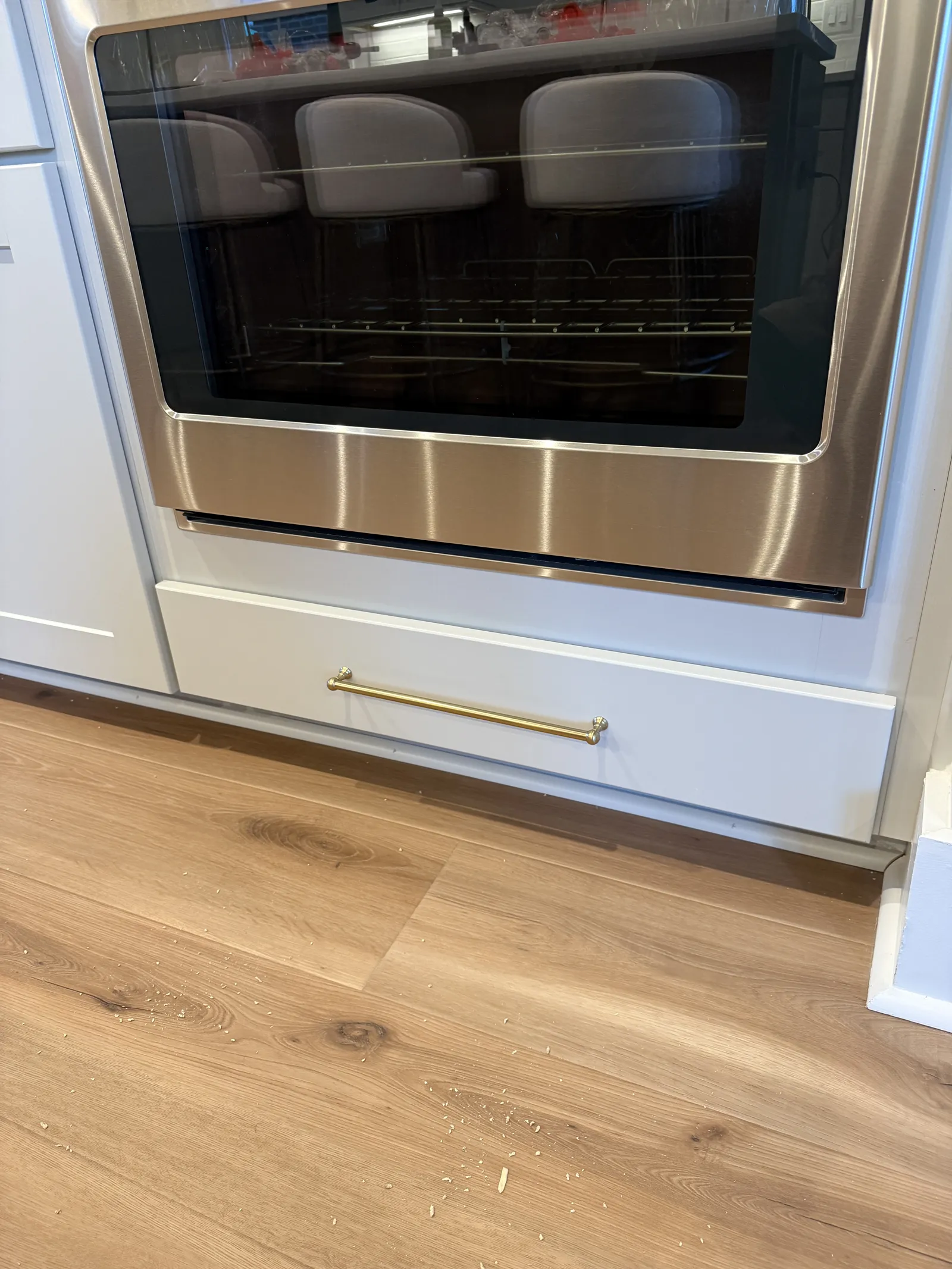
What this Ballantyne job included
The kitchen used gold knobs on the doors and gold bar pulls on the drawers, including a long pull on the wide drawer under the wall ovens. The appliance handles were already gold and already in place; we installed the knobs and pulls on the cabinets to sit in the same family.
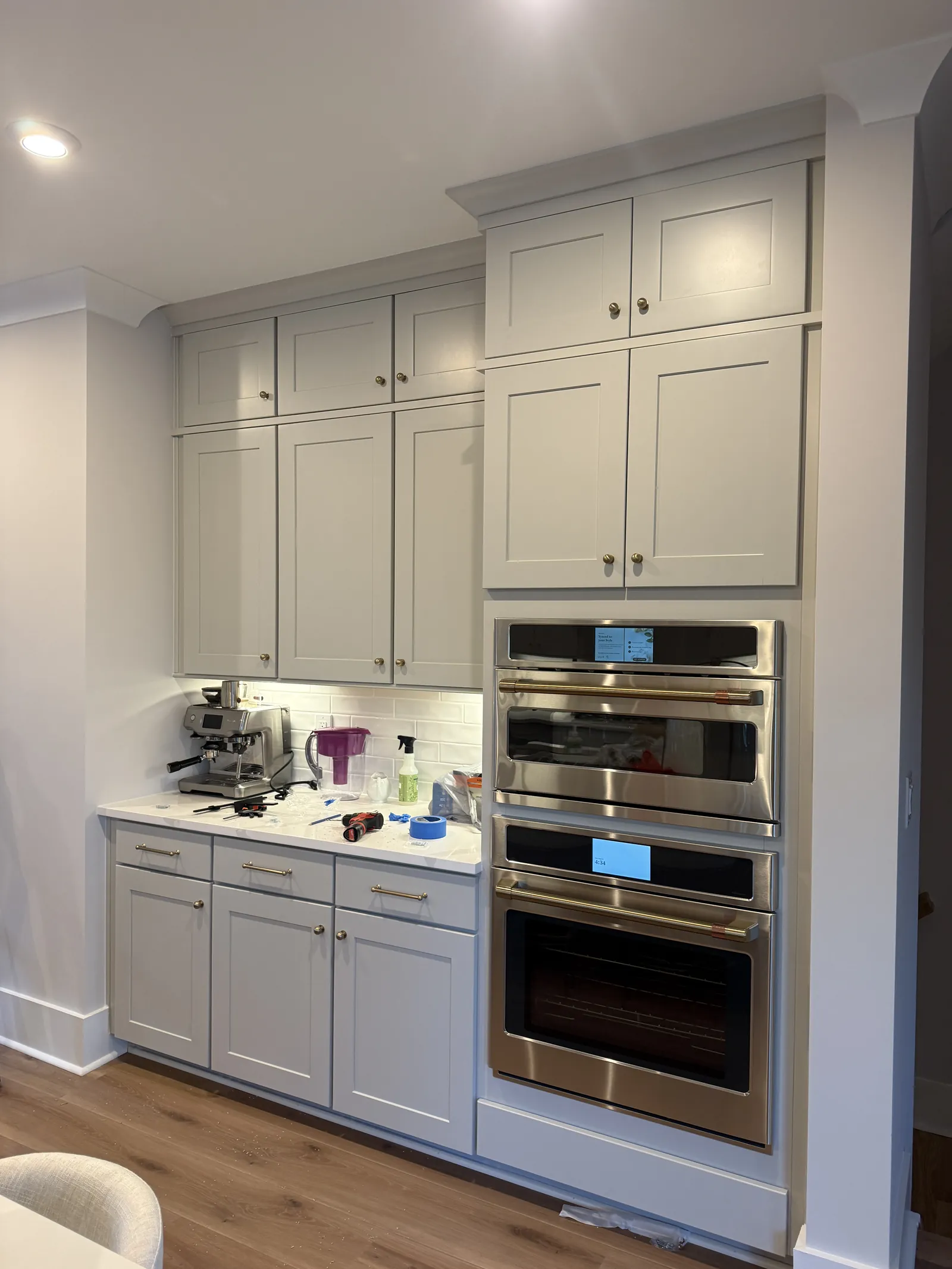
The other rooms used a different finish on purpose:
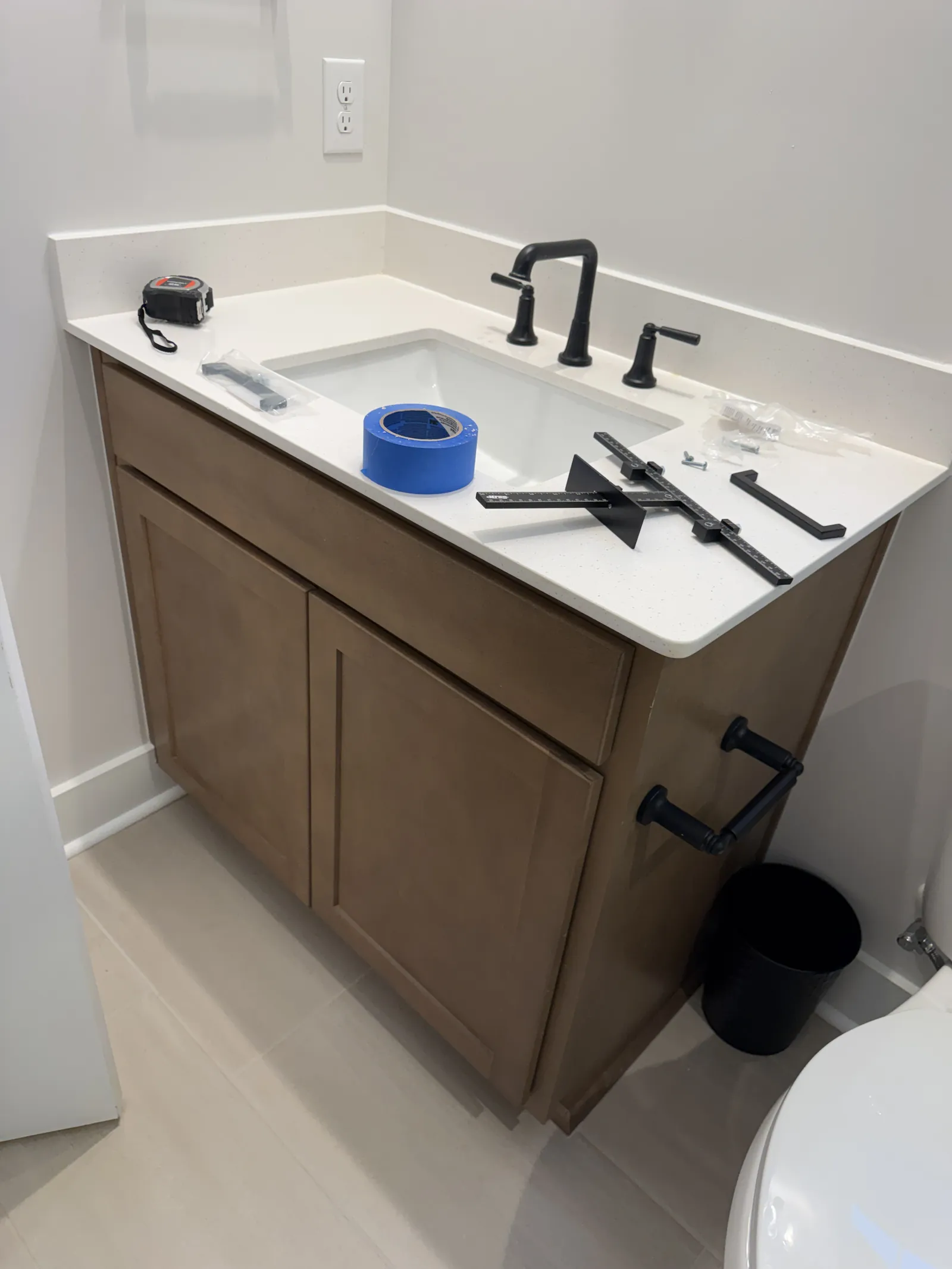
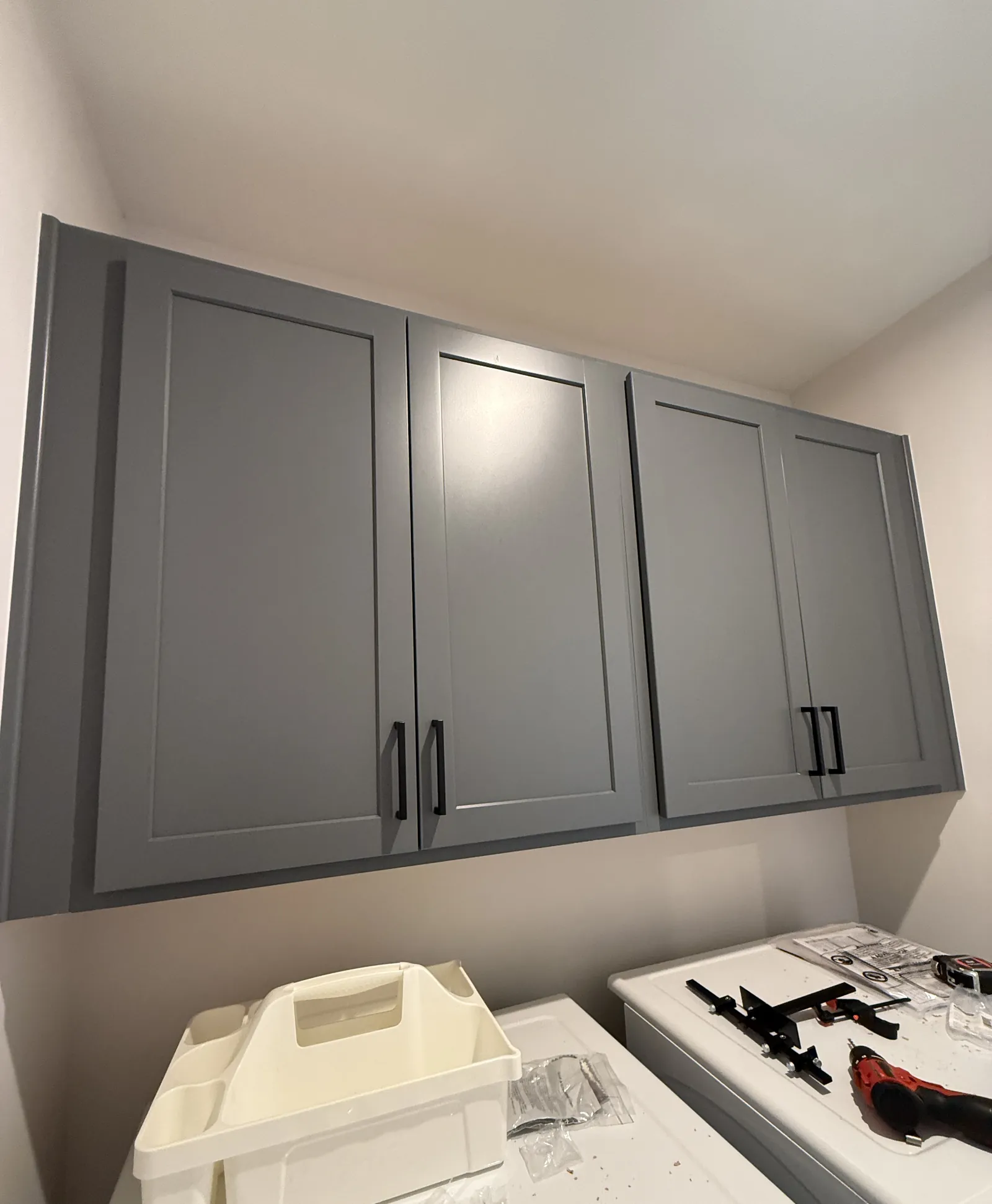
- The laundry cabinets got matte-black bar pulls on gray upper doors.
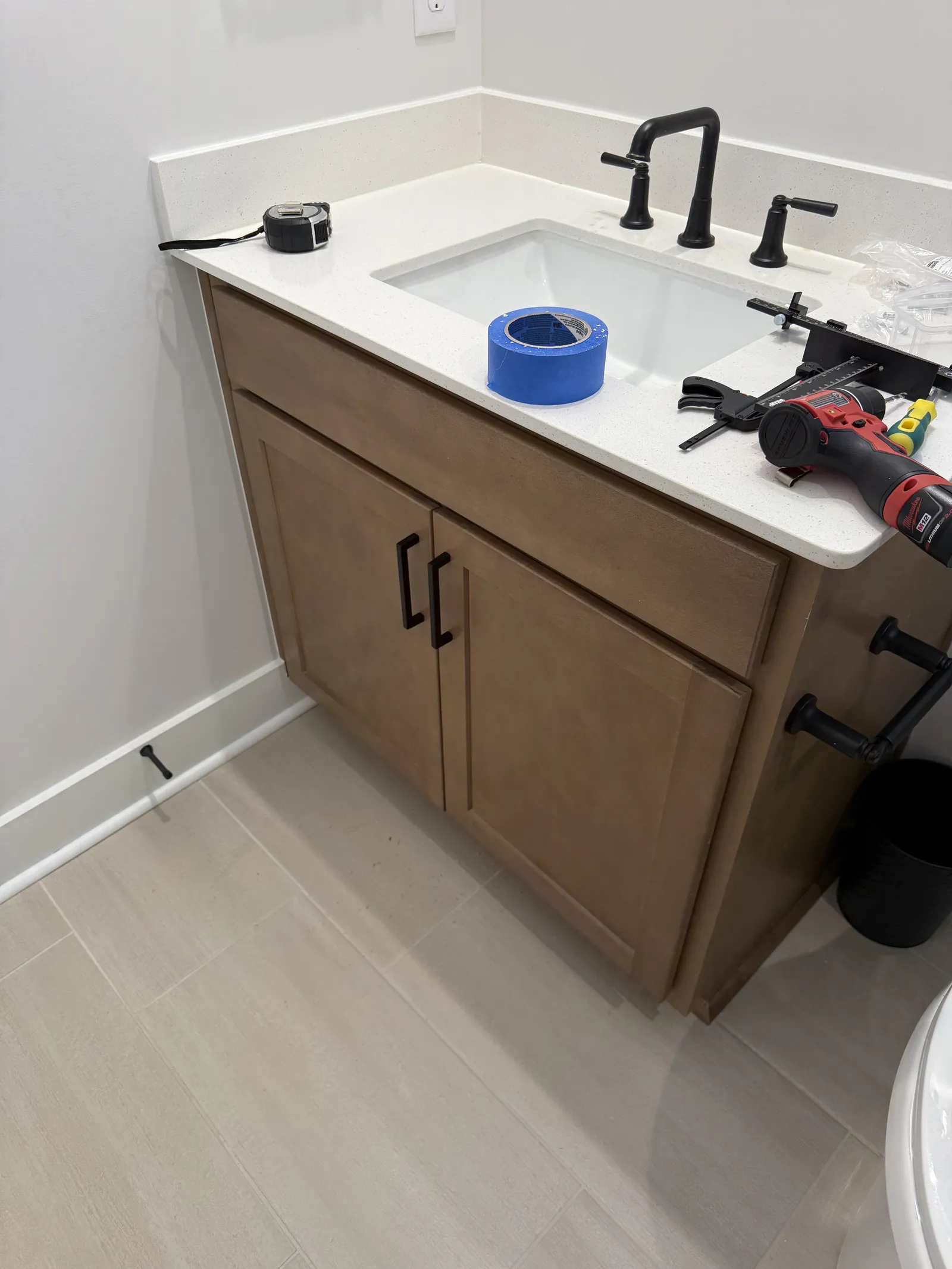
- A wood bathroom vanity got matte-black pulls, matching the black faucet in that bath.
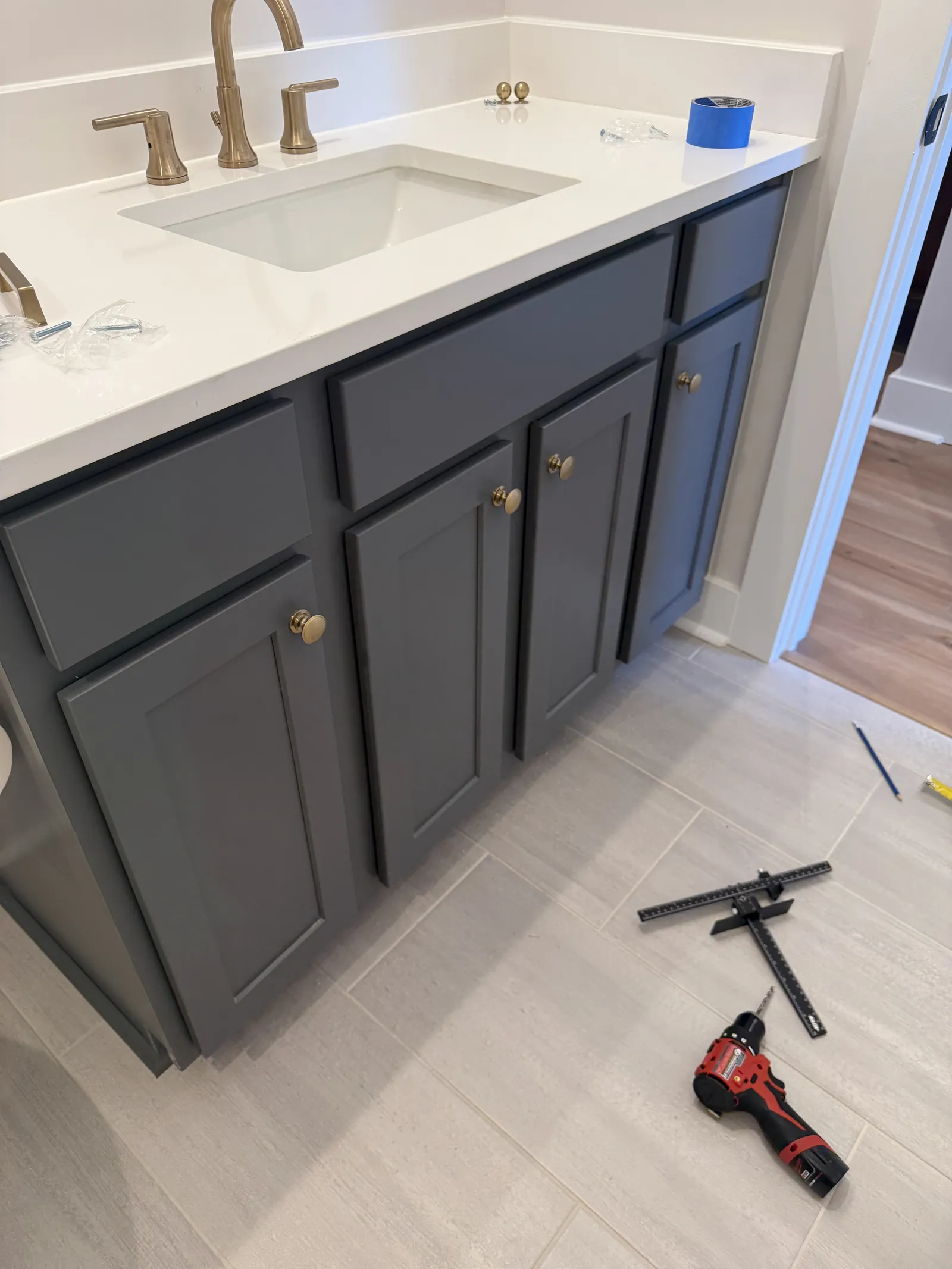
- A dark-gray vanity got gold knobs on the doors and a gold pull on the drawer, matching its gold faucet.
Mixing finishes from room to room is fine when each room stays consistent, and when the hardware agrees with the faucet and fixtures already in that space.
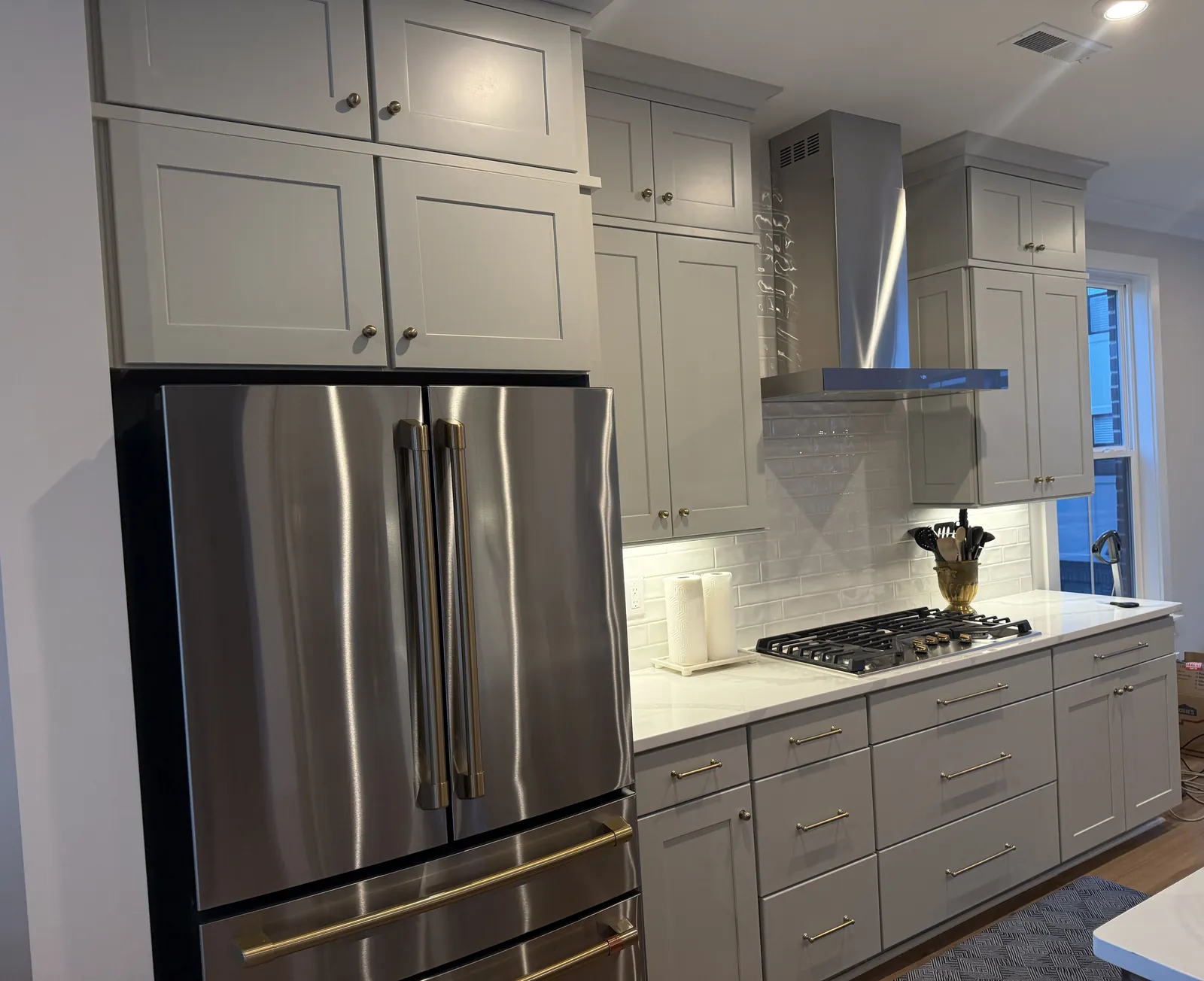
Pulls vs. knobs, and getting the size right
This kitchen used a common split: knobs on doors, pulls on drawers. A knob is easy to grab on a door stile. A pull is more comfortable on a wide or heavy drawer because you can use your whole hand.
For a pull, the number that matters is center-to-center — the distance between the two screw holes. It is printed on the package, and you can also measure it on the hardware before anyone drills. A longer pull often looks better on a wide drawer, but the hole spacing has to match the piece you actually bought.
Knobs need one hole. Pulls need two, and those two holes have to land at the same height. That is why we set a jig once and reuse it, instead of measuring each drawer by eye.
Where the hardware should sit
On drawers, we center the pull left to right. On a standard drawer we also center it vertically. On a taller drawer, the pull can sit slightly above center so it is easier to reach.
On doors, the knob or pull goes on the stile opposite the hinges. On upper doors, it usually sits near the bottom corner of that stile. On lower doors, it sits near the top corner. The exact offset should be the same on every door in the room. If each piece is placed by eye, you will see it every time you walk in.
The tools that keep a kitchen consistent
The useful kit is simple: blue painter’s tape on the face, a tape measure, an adjustable cabinet-hardware jig, a sharp drill bit, and a drill. The tape lets you mark the center, protects the finish, and reduces chip-out when the bit comes through. The jig is set once to the pull’s center-to-center spacing and reused on every matching piece. Screws go in from the inside of the door or drawer, not from the face.
How we installed the pull under the wall ovens
The timelapse below is one drawer: the long gold pull under the wall ovens. It is a good example because the face is wide, and any error would be obvious.
- Tape the drawer face so the marks and the bit have a clean surface to work on.
- Measure to find the center of the drawer, left to right.
- Set the jig to the pull’s hole spacing and line it up on that center, at the agreed height.
- Drill through the jig holes, keeping the bit square to the face. Do not lean the drill.
- From inside the drawer, drive the screws into the pull. Check the screw length first: too long and a screw can bottom out or mark the face; too short and the pull will sit loose.
- Confirm that the pull is level and tight, then peel the tape.
Once the first piece is right, the same jig setting is used on every matching drawer.
How to avoid blown-out or crooked holes
Tape and a sharp bit do most of the work against chip-out. Let the bit finish the hole; do not shove it through the last eighth of an inch. Keep the drawer or door open and supported so you do not drill into the cabinet box or anything stored inside. If a hole is wrong, it is a permanent mark in a finished door, so we confirm the first piece and then repeat the same setting.
When new hardware does not match the old holes
This Ballantyne kitchen was new, so we were not working around old holes. Replacement jobs are different. If the new pulls use a different center-to-center than the old ones, the old holes have to be filled, sanded, and often touched up before you can drill again. Sometimes a backplate can cover an old hole; sometimes it is cleaner to choose hardware that matches the existing spacing. Send photos of the current holes and the new hardware so we can tell you which case you have.
What this kind of visit costs
We do not publish a flat price per knob or per kitchen. General handyman labor starts at $95/hr with a one-hour minimum. Time depends on the number of pieces, whether the cabinets already have holes, and whether any doors need adjustment.
The cleanest way to get a number is a photo estimate. Send wide photos of each room, a close-up of the hardware or the box, a count of doors and drawers, and your ZIP. Note whether these are new cabinets or a replacement. We confirm the scope before any holes are drilled.
This work also fits a move-in punch list in Ballantyne, alongside small carpentry and other general handyman tasks. If a door or drawer is already rubbing or coming loose, see our notes on cabinet door and drawer repair before you add hardware to a door that still needs to be fitted.
Frequently asked questions
How much does cabinet hardware installation cost in Charlotte?
General handyman labor starts at $95 per hour with a one-hour minimum. Time depends on the number of doors and drawers, and on whether we are drilling new holes or working around old ones. Send photos for an estimate rather than assuming a per-piece price.
Do I need to supply the knobs and pulls?
Yes. Customers provide the hardware and the correct screws. Send a photo or a product link before the visit so we can check the hole spacing and screw length.
Can you install new pulls if the old holes do not match?
Yes, but it is a different job than drilling new cabinets. The old holes usually need to be filled and touched up first, or you can choose hardware that matches the existing spacing.
Should I use knobs or pulls?
Either can look right if the placement is consistent. A common layout, and the one we used in this Ballantyne kitchen, is knobs on doors and pulls on drawers. Wider drawers are usually more comfortable with a pull.
How long does a full kitchen take?
It depends on the count. A few loose pulls can be a short visit. A full kitchen plus laundry and baths takes longer because every piece is visible. A photo count of the doors and drawers is the best way to plan the appointment.
Need cabinet hardware installed in Ballantyne?
If you are updating knobs or pulls in Ballantyne or elsewhere in south Charlotte, send photos through our photo estimate form or text (980) 201-6705. Include your ZIP, a count of doors and drawers, and whether the cabinets already have holes.
We regularly work in Ballantyne and handle related carpentry in Ballantyne as well.